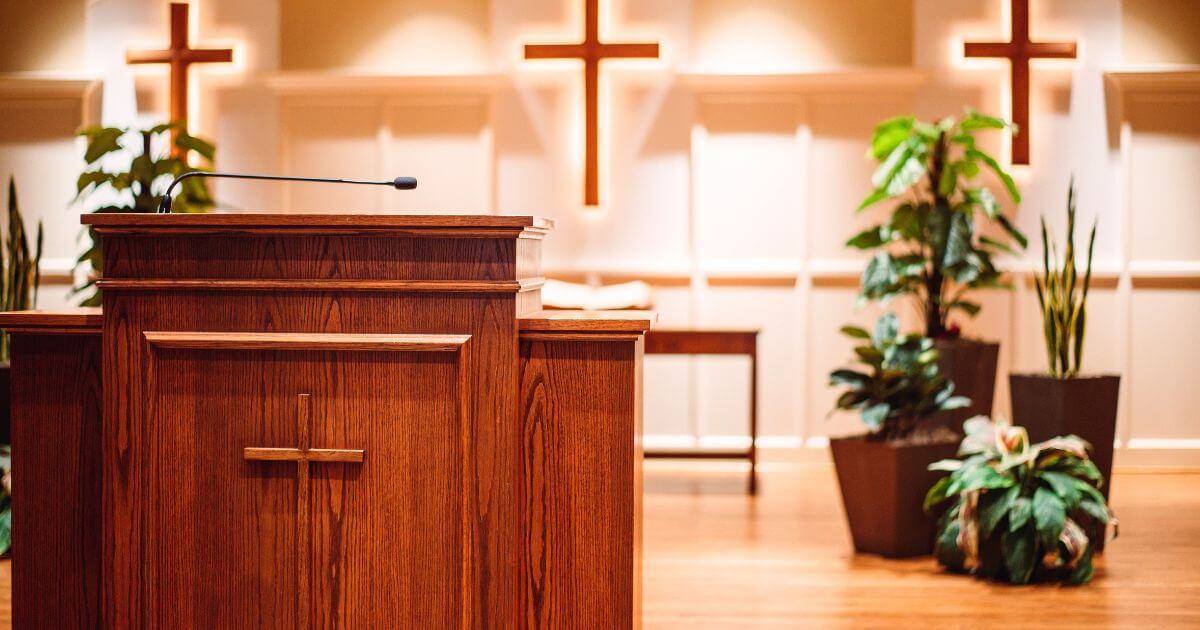
What is a pulpit?
What is a pulpit?
The pulpit is more than a platform—it’s a symbol of God’s truth being taught and lived. What matters most isn’t the platform a pastor stands on but the Word that is being taught from it.
what does the bible say?
The pulpit is a raised platform that symbolizes the authority and influence of God’s Word being faithfully taught and lived. As seen in the case of Ezra, standing on a raised platform helps the voice carry farther through a large crowd. More than that, though, a pulpit represents the authority with which the words are spoken (Nehemiah 8:4–5). Some ministers take standing in a pulpit too far—focusing more so on their perceived power than on the love that should be seasoning their words (1 Corinthians 13:1–3). We must remember that it matters more than a pulpit, or who is standing in it, is building up the body of Christ (Ephesians 4:11–16) through preaching and teaching the very words of God (2 Timothy 3:16–17). Additionally, those in pastoral or similar roles must not just pastor when they are in the pulpit, but also outside of it (2 Timothy 4:2). Whether we are the one in the pulpit teaching or a listener in the congregation, we must be doers—not just hearers—of the Word (James 1:22).
from the old testament
- A pulpit is a raised platform, podium, or lectern in a church from which a pastor or clergy member preaches the sermon or homily. Speaking God’s Word in front of a congregation from a raised platform is a practice dating back to Old Testament times. Nehemiah 8:4–5 records, “Ezra the scribe stood on a wooden platform that they had made for the purpose. … And Ezra opened the book in the sight of all the people, for he was above all the people.”
from the new testament
- The important thing about our churches is not whether or how we use a physical pulpit, but rather the content of our worship and the attitudes of our hearts when we come (1 Corinthians 13:1–3).
- Much more important than a pulpit is whether the church is studying and obeying God’s Word (Ephesians 4:11–16).
- Paul explained that all Scripture is God-breathed and is useful (2 Timothy 3:16–17). Of much greater importance than the physical pulpit is the content of the teaching and its effects in the lives of people.
- Pulpit or no pulpit, Paul exhorted Timothy to “preach the word; be ready in season and out of season; reprove, rebuke, and exhort, with complete patience and teaching” (2 Timothy 4:2).
- When we are listening to someone speaking from a pulpit, it can be easy to tune out and only hear (not apply) biblical teachings to our life, but James 1:22 says, “But be doers of the word, and not hearers only, deceiving yourselves.”
implications for today
The Bible does not comm and nor prohibit the use of a pulpit during worship. It does call for believers to meet together (Hebrews 10:25), for them to pray (1 Thessalonians 5:17), for them to examine Scripture (Acts 17:11; 2 Timothy 2:1–2, 15; 3:16–17; 4:2), and for them to encourage one another with spiritual songs (Ephesians 5:19). Whether a church or its minister uses a pulpit is a matter of choice. In the Christian tradition, many pulpits have been ornate wooden platforms raised far above the congregation and even included a canopy overhead to help the sound project down to the assembled people below. The ornateness was meant to highlight the importance of the words being spoken in contrast to the humbleness of the human speaking to them. In evangelical churches, the pulpit is often in the center of the stage, highlighting the centrality of teaching Scripture during their services. In Catholic churches, where the pulpit is called an ambo, the pulpit is often to the side because the altar, or Eucharist table, is the focus of the service. In some churches, like Quaker meetinghouses, there are no pulpits at all because the congregants are all supposed to minister to one another. In Jewish synagogues, this place of Scripture reading and teaching is called the bema (or bimah). In Islamic mosques, it is the minbar. Many religious traditions use a raised platform along with a surface upon which to place scripture or teaching notes. Another way the word pulpit is used is to refer to the power, influence, or authority of the teaching spoken from there or the preachers, collectively, who st and behind one. So one might say, “The pulpit should not be used to peddle political influence,” meaning pastors should not share their personal political opinions while preaching. Or one might hear, “Pastors should step out from behind the pulpit,” meaning the pastor should be out in the community serving and sharing in the experiences of his congregation. Horace Greeley said, “Printer’s ink is the great apostle of progress, whose pulpit is the press,” meaning progress uses the press as a way to influence people the way preachers influence the hearts and minds of their congregations. In summary, the word pulpit can refer figuratively to the authority of preachers and the influence of their sermons, or literally to the physical st and or lectern or entire raised platform or stage from which ministers preach. Whether the pastor speaking from a pulpit or any believer in daily life, we should always seek to know and speak the truth about God, be built up in Him, and love others (Ephesians 4:15; Acts 2:42; John 13:34–35).
Recap
understand
- The pulpit is a platform and a symbol of God’s Word and authority.
- The impact of a pulpit depends on faithful teaching and application of Scripture, not the platform itself.
- A pulpit represents the broader influence of ministry in guiding believers’ lives.
reflect
- How do you uphold God’s Word and authority in your life?
- How do you view the authority and influence of Scripture in your life, especially when taught from a pulpit?
- What impacts the way you receive God’s Word when taught from a pulpit?
engage
- How does the way a pastor uses the pulpit reflect the heart and character of their ministry?
- How can a pulpit’s influence extend beyond the physical platform to shape the spiritual growth of its hearers?
- How can the church ensure that the pulpit points people to Christ rather than to the position or personality of the preacher?