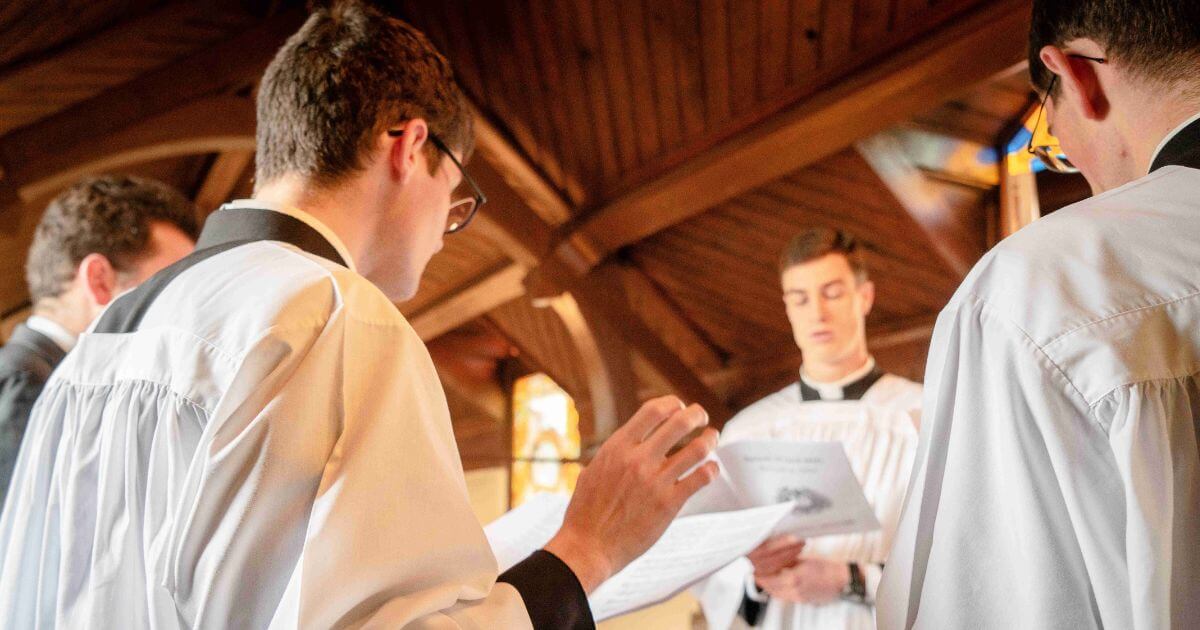
What is a bishop? What is a biblical definition of bishop?
What is a bishop? What is a biblical definition of bishop?
The biblical definition of a bishop referred to the leaders of a local church. These were male leaders who had integrity, spiritual maturity, and the ability to teach God’s Word effectively.
what does the bible say?
In the Bible, a bishop is not a distant administrator but a spiritually mature leader entrusted with the care of a local church. The New Testament uses the word episkopos—also translated elder, pastor, or overseer—to describe the same role of shepherding God’s people. Paul makes it clear in the New Testament that it takes a very specific type of person to fulfill the role of a bishop (or overseer/pastor). In 1 Timothy 3:1-5, we read that while a bishop is a noble role, it comes with qualifications. First, a bishop must only have one wife and be able to manage his household with dignity and be able to do so well. Second, a bishop must have high moral character. Third, in verses 6-7 Paul adds that a bishop must not be a new believer and he must be “well thought of by outsides.” Later, in Titus 1:7-9, Paul says bishops must not be prideful, have out of control anger, engage in drunkenness or violence, and must not be greedy. Instead, they must be hospitable, love doing others good, maintain self-control, be upright, be holy, and be disciplined. Moreover, they must properly exegete God’s Word and teach it correctly so they can accurately correct those whose beliefs or teachings contract God’s Word. While later church history expanded the term “bishop” into higher levels of leadership, the Bible roots it firmly in the life of the local church as a calling defined by integrity, maturity, and faithful teaching.
from the old testament
- The role of a bishop was not given in the Old Testament.
from the new testament
- First Timothy 3:1-5 makes it clear that a bishop (or overseer/pastor) must hold themselves to high standards of morality. They must be “above reproach, the husb and of one wife, sober-minded, self-controlled, respectable, hospitable, able to teach, not a drunkard, not violent but gentle, not quarrelsome, not a lover of money. He must manage his own household well, with all dignity keeping his children submissive, for if someone does not know how to manage his own household, how will he care for God ’s church?” Paul also mentions that a bishop should not be a recent convert and must have a good reputation with “outsiders” (1 Timothy 3:6-7).
- In Titus 1:7-9, Paul repeats some of the requirements from 1 Timothy 3:1-5 and adds on that bishops “…must not be arrogant or quick-tempered or a drunkard or violent or greedy for gain, but hospitable, a lover of good, self-controlled, upright, holy, and disciplined. He must hold firm to the trustworthy word as taught, so that he may be able to give instruction in sound doctrine and also to rebuke those who contradict it.”
implications for today
In the New Testament, bishop is a translation of the Greek word episkapos. The same word is also translated elder, pastor, or overseer. All of these words refer to the same role of the leader of a local church. In the earliest congregations, the term elder was the most common name associated with a local church leader. By the time the apostle Paul wrote Philippians, however, in approximately AD 49, he referred to both elders and deacons. That is, the only two roles in the early church were that of elder and deacon. The writings of the early church fathers confirm this role of bishops as the teaching leaders (or elders) who served alongside deacons to oversee the church. Clement of Rome (c. 95) and the Didache both refer to elders and deacons from the late first century to the early second century as the church’s leaders. Over time, the term bishop changed in church traditions and additional layers of leadership were added to the church. By the time the Council of Nicea was held in AD 325, the term bishop was regularly applied to the Christian leader of each city or region. One bishop was responsible for several churches, overseeing the individual lead elders at each church location. Many denominations and church traditions continue this use of the term bishop today. However, at its core, elders (otherwise known as bishops) and deacons were to lead local churches. The role that it has changed into as a formal office with hierarchical power and oversight far removed from the day-to-day life of a local congregation is not the intent of Scripture. This does not make additional church leadership or oversight over groups of churches wrong, but we must remember this: in the Bible, a bishop’s authority flowed from faithful character and hands-on shepherding, not from titles, distance, or institutional power.
Recap
understand
- A bishop is the same as an elder or pastor and was meant to serve as a leader of a local church.
- A bishop is marked by maturity, and sound teaching.
- Later church structures expanded the role of bishop, but biblically a bishop’s authority flows from faithful shepherding, not hierarchy.
reflect
- How does the biblical emphasis on character and spiritual maturity challenge the way you think about leadership in the church?
- In what ways does seeing a bishop as a shepherd, not a title-holder, reshape how you view authority and service in God’s church?
- How does the priority Scripture places on sound teaching influence how you listen to, evaluate, and support your church’s leaders?
engage
- How does the New Testament definition of bishop as elder/pastor clarify or challenge modern church leadership structures?
- Why do the biblical qualifications for bishops focus more on character than on skills, influence, or organizational ability?
- How can churches today uphold biblical leadership while navigating traditions that use the term “bishop” differently?