Was Jesus white?
Was Jesus white?
Jesus was a Middle Eastern Jew with ordinary features, not white. His mission, not His appearance, is what saves people of every race, culture, and nation.
what does the bible say?
The Bible does not provide a specific physical description of Jesus, emphasizing instead His identity and mission as the Messiah. Isaiah comes closest to describing Jesus by indicating that His physical appearance was not distinctive (Isaiah 53:2). Artistic portrayals of Jesus often reflect the culture of the artists, which is why Western art tends to depict Him as white. This is not inherently wrong unless those images become idols (Exodus 20:4) or distort His universal role as Savior. The apostle Paul wrote to the Galatians that believers of all ethnicities and nationalities are unified in Christ (Galatians 3:28), so depictions of Jesus as one ethnicity or another should not divide believers. Ultimately, Jesus came for all people, and His appearance has no bearing on the salvation He offers to every nation, tribe, and tongue.
from the old testament
- Jesus was born into the Jewish people, descendants of Abraham, Isaac, and Jacob, rooted in the Middle Eastern region (Genesis 12:3; Isaiah 11:1).
- Isaiah 53:2 describes the suffering servant as having “no beauty or majesty to attract us to him, nothing in his appearance that we should desire him.” This implies Jesus’ appearance was ordinary and not striking or distinguished.
from the new testament
- Jesus was born in Bethlehem, Judea, to Jewish parents, indicating His ethnic and cultural background was Jewish/Middle Eastern (Luke 2:4-7).
- The Samaritan woman recognizes Jesus as a Jew, reflecting His ethnic identity in that region (John 4:9).
- In Revelation 1:14-15 Jesus’ glorified form with hair “white like wool” and feet like “burnished bronze” is meant to be symbolic rather than literal skin tone.
- Galatians 3:28 emphasizes unity in Christ beyond ethnicity: “There is neither Jew nor Greek… for you are all one in Christ Jesus,” showing that physical or ethnic distinctions do not define His spiritual significance.
implications for today
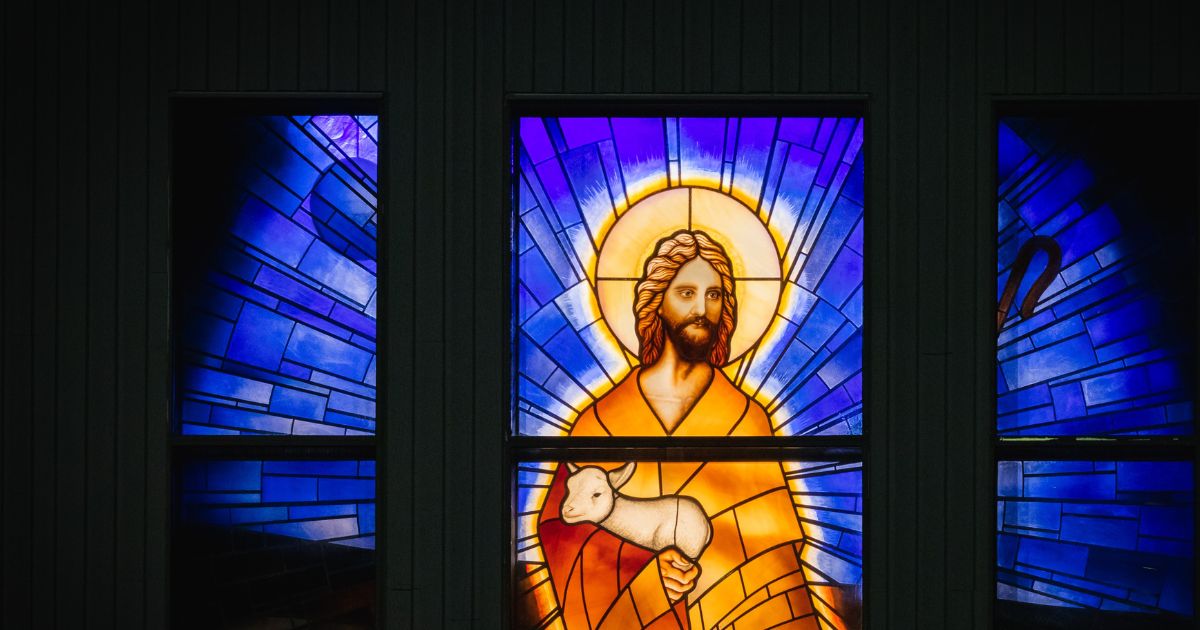
The Bible provides no physical description of Jesus, but in a lot of Western art, we see Him portrayed as white. Why is this? Well, put simply, artists throughout various regions of the world have created paintings and artistic depictions of a Jesus whose looks match that of their own culture. In the Western world, there is more exposure to art of European origin which tends to portray Jesus as white. However, art originating in other continents like Africa and Asia portrays Jesus as looking more similar to the respective culture in which the art was created. Having artistic interpretations of Jesus in a way that looks similar to the beholder can be a powerful way for people to conceptualize Jesus as one who came to Earth and walked among us as a normal, average-looking person. Based on the region where Jesus was born—in the Mediterranean/Middle East—He was likely not white, but rather had a more olive or tan complexion with dark hair and eyes. Isaiah 53:2 says of the Messiah, “He had no form or majesty that we should look at him, and no beauty that we should desire him.” Jesus looked like a normal person. Nothing about His appearance indicated He was the Son of God. Paintings depicting Jesus as white even though he probably wasn’t is not a problem unless someone turns the image into an idol. This is true of any artistic interpretation of Jesus. People automatically tend to imagine that Jesus looks like they do, but Jesus’ physical appearance does not pertain in any way to the redemption and salvation He brought to the world. Jesus is the Savior of the whole world—people of all ethnicities, nationalities, races, and skin colors can be reconciled to God and have their sins forgiven through Christ’s death and resurrection (Matthew 28:19; Galatians 3:8, 26-29).
Recap
understand
- Jesus was a Middle Eastern Jew with likely olive-toned skin, dark hair, and ordinary features, not a white European figure.
- The Bible emphasizes Jesus’ identity and mission over His appearance.
- Artistic depictions of Jesus vary by culture, and while not inherently wrong, they must not distort His universal role as Savior for all people.
reflect
- How have your cultural surroundings shaped the way you picture Jesus?
- How does focusing on Jesus’ mission rather than His appearance impact your faith?
- How do you respond when artistic images of Jesus don’t match your expectations or assumptions?
engage
- How does understanding Jesus’ ethnic and cultural background help us engage with people from different cultures?
- What are the potential risks and benefits of portraying Jesus through the lens of different cultures?
- How can the global church reflect the truth that Jesus came for every nation, tribe, and tongue in its worship and witness?