Who is responsible for Jesus Christ’s death?
Who is responsible for Jesus Christ’s death?
Jesus’ death was both the result of human sin and the fulfillment of God’s sovereign plan. Though Judas, the leaders, the crowd, and Rome played their parts, Jesus willingly gave His life, so we could be forgiven.
what does the bible say?
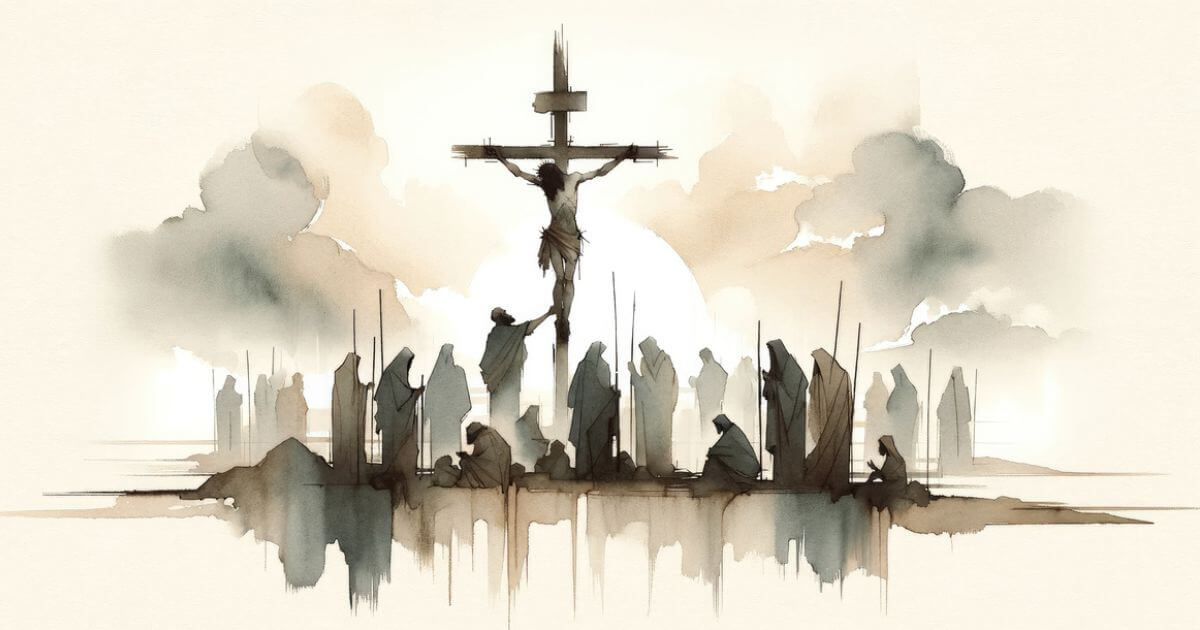
Many played a role in Jesus’ death. Judas betrayed Him for money (Matthew 26:14–16), while the Jewish leaders plotted to arrest Him and eventually handed Him over to Pilate (Matthew 26:3–4, 59–66; 27:1–2). When Pilate offered to free Him, the crowd demanded that Barabbas be released instead, calling for Jesus’ crucifixion (Matthew 27:20–23; Luke 23:21). Pilate then authorized the sentence, and Roman soldiers carried out the brutal act of flogging and crucifixion (Luke 23:24–25; John 19:16–23; Matthew 27:27–35). Yet the Gospels and Acts also emphasize that behind these human choices was God’s sovereign plan. Peter declared that Jesus was handed over according to God’s plan (Acts 2:23; 4:27–28), and Jesus Himself taught that no one took His life from Him, but He laid it down willingly (John 10:17–18). At the deepest level, Scripture identifies our sin as the cause of His death. He bore judgment for our guilt, dying to provide a way to God (1 Peter 3:18; 2 Corinthians 5:21).
from the old testament
- While the reasons for Jesus’ death are clearer in the New Testament, the Old Testament foreshadowed it by saying that “it was the will of the LORD to crush [God’s Servant]; he has put him to grief; when his soul makes an offering for guilt, he shall see his offspring; he shall prolong his days; the will of the LORD shall prosper in his hand” (Isaiah 53:10). God’s Servant, in this passage, was later identified as Jesus. That is, it prophesied that God would ultimately be the one behind Jesus’ death.
from the new testament
- The New Testament attributes responsibility for Jesus’ death to multiple parties. However, when searching for someone to blame, we must begin with Jesus’ words: “No one takes [my life] from me, but I lay it down of my own accord” (John 10:18). He was indicating that, although others would sinfully kill Him, He was not forced to die. Instead, He did so voluntarily.
- That said, who were some of the people involved in His death? Judas stands out because he was one of Jesus’ disciples, yet he took a bribe of thirty pieces of silver to betray Him (Matthew 26:14–16). His betrayal set in motion the process that led to Jesus’ death.
- However, Judas was not entirely responsible. Before him, religious leaders had already been planning to arrest Him (Matthew 26:3–4) and were seeking false testimony against Him (Matthew 26:59–66). Once they captured Him, they handed Him over to Pilate for execution (Matthew 27:1–2).
- The crowd in Jerusalem also played a part. Influenced by the leaders and faced with the choice between the notorious criminal Barabbas and Jesus, they requested that Barabbas be released and demanded that Jesus be crucified (Matthew 27:20–23; Luke 23:21). Matthew notes that they took responsibility for their choice, crying out, “His blood be on us and on our children!” (Matthew 27:25).
- The Roman authorities were the ones who carried out the sentence. Although Pilate declared Jesus to be innocent, he sinfully yielded to pressure and handed Him over to be crucified (Luke 23:4, 24–25). The soldiers scourged Him and nailed Him to the cross; they also gambled for His garments as they watched over His death (John 19:1–3, 16–24; Matthew 27:27–36).
- In short, then, all parties involved—individual Jews, Jewish leaders, individual Gentiles (such as the soldiers), and Gentile leaders—worked together to kill Jesus.
- Nevertheless, Scripture assigns the ultimate responsibility to God working through sinful men and women. Peter stated that Jesus was “delivered up according to the definite plan and foreknowledge of God” and was killed “by the hands of lawless men” (Acts 2:23). The “lawless men” (sinful people) were accountable for their sin, yet they also unknowingly carried out God’s plan.
- The early church later prayed that “truly in this city there were gathered together against your holy servant Jesus, whom you anointed, both Herod and Pontius Pilate, along with the Gentiles and the peoples of Israel, to do whatever your h and and your plan had predestined to take place” (Acts 4:27–28). That is, the individuals were blamed while acknowledging God’s h and in it all.
- There is also another group responsible for Jesus’ death: every man and woman ever born. Paul said, “for all have sinned and fall short of the glory of God, and are justified by his grace as a gift, through the redemption that is in Christ Jesus, whom God put forward as a propitiation by his blood, to be received by faith” (Romans 3:23–25a). Because everyone is a sinner, each person has the penalty of death hanging over him or her (Romans 6:23a). However, God sent His Son as a “propitiation by his blood,” which is a blood sacrifice. That is why God was pleased to kill Him (Isaiah 53:10): by killing Jesus for the sins of the world, He opened a way for sinners to be reconciled to Him.
implications for today
We can’t just blame a single group for Jesus’ death while ignoring our own share of guilt. Yes, certain individuals and groups physically and willingly killed Jesus. But, in part, His death was also because of your sin. Let that thought humble you! But also allow it to give you joy—the cross was always God’s plan to rescue people like you before He even created the world (Revelation 13:8). Instead of trying to find someone else to blame, bring your sin to the crucified and risen Lord and receive His mercy. He died willingly and offers His salvation just as freely. It is available for everyone. In fact, after Jesus rose again, Peter faced the very people who had cheered for Jesus’ death and told them that if they repented, they would be forgiven (Acts 2:37–38). What a gracious God! He is willing to forgive even those who drove the nails into Jesus’ hands. If you have been saved, reject any spirit of prejudice or superiority toward people groups you might feel were responsible. Let the cross humble you, and out of gratitude, reach out to everyone with the good news that Jesus was killed…and now lives forevermore!
Recap
understand
- Many shared responsibility in Jesus’ death—Judas, the religious leaders, the crowds, and Rome—but Jesus chose to lay down His life.
- God’s plan worked through human sin to accomplish salvation.
- Our own sin ultimately made Jesus’ death necessary, but His sacrifice opened the way to forgiveness and eternal life.
reflect
- How does realizing that your sin contributed to Jesus’ death change the way you view the cross?
- What does Jesus’ willingness to die teach you about the depth of His love for you?
- How can gratitude for His sacrifice shape your attitude toward others?
engage
- Why is it important to underst and both human responsibility and God’s sovereignty in Jesus’ death?
- How does recognizing our shared guilt at the cross promote humility and unity among believers?
- What does God’s ability to bring salvation out of such injustice reveal about His character and plan?