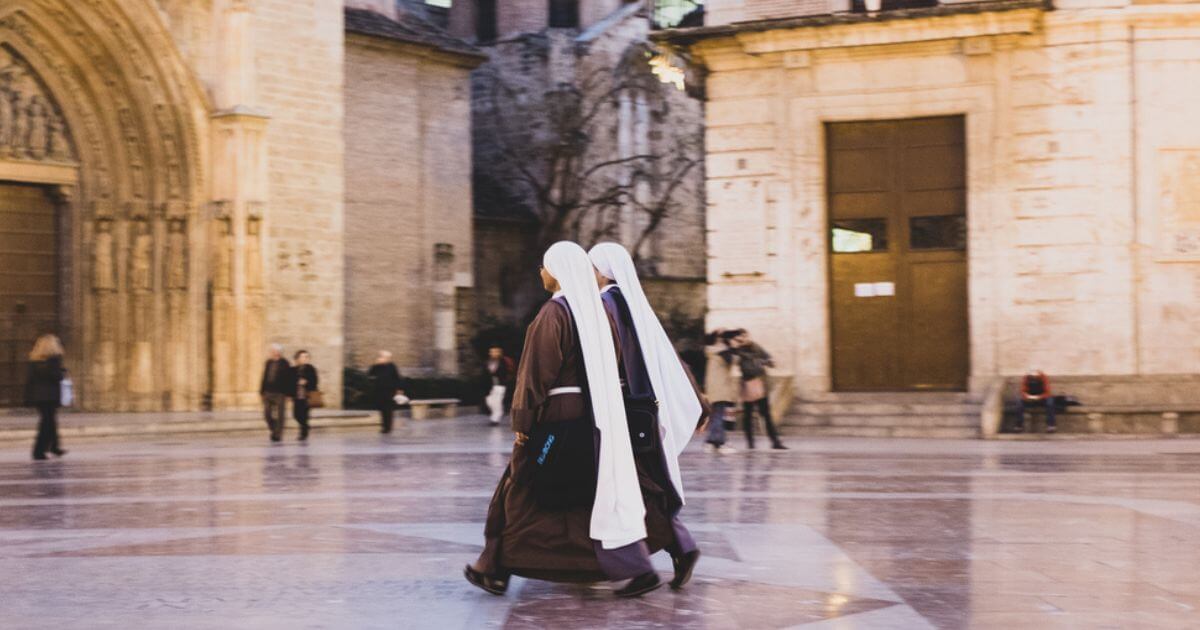
What is a religious order?
What is a religious order?
A religious order is a group of men and women who choose to live under certain religious vows set by the leader of that religion. Religious orders are most common in the Roman Catholic Church, though there are also orders in the Episcopal Church, Eastern Orthodox Church, and other liturgical churches.
what does the bible say?
In Matthew 5:13–16, Jesus tells his disciples that they are the “salt of the earth” and communicates they should not hide the light that is in them but rather share it with the world. We, like the disciples, can spread Christ’s light to those around us. However, if we are bound to a life of separation from the world, as many members of religious orders are, we may miss being able to share Christ’s love and gospel (Matthew 22:39; 28:19-20) as much as we could if we lived in the normal society. Biblically, there is a distinction between being in the world and being of the world (John 17:14–21). While we should set ourselves apart spiritually, we are not biblically mandated to live in a different location than the rest of the world. Moreover, religious orders that believe in works-based salvation or “winning” favor with God, or that enforce marital and food restrictions go directly against God’s Word (Ephesians 2:8–10; 1 Timothy 4:2–4).
from the old testament
- God established set-apart groups for sacred service, especially the Levites and priests, whose lives were ordered around worship, teaching, and holiness rather than personal vocation (Numbers 3:5–10; Deuteronomy 33:8–10; Malachi 2:7).
- The Nazirite vow shows voluntary, disciplined devotion to God through specific commitments, sometimes for life, reflecting an ordered religious calling (Numbers 6:1–8; Judges 13:5).
- Israel as a whole was called to be a holy nation set apart for God, emphasizing communal identity, obedience, and ordered devotion (Exodus 19:5–6; Leviticus 20:26).
- In the intertestamental period, there were other movements like the Essenes who sought to preserve holiness and faithfulness under foreign rule, often through withdrawal into disciplined communal life.
from the new testament
- Though most religious orders have admirable purposes and those who join them desire to honor God, the Bible does not call Christians to separate their existence from the wider culture (Matthew 5:13–16).
- Many in religious orders rarely interact with “normal” people and have limited opportunity to influence them with Jesus’ love and gospel message (Matthew 22:39; 28:19-20).
- We are not to be “of” the world, but we are still “in” it (John 17:14–21). Religious orders tend to put themselves literally outside of the normal world.
- Religious orders have a tendency toward works-based salvation or works-based righteousness. While many of the things religious orders seek to do are good, they do not earn us salvation nor garner us favor with God. Our salvation is based solely on God’s grace and received through faith in Jesus Christ (Ephesians 2:8–10).
- First Timothy 4:2–4 says to avoid imposing restrictions about marriage and foods on Christians—which many religious orders do.
implications for today
Fundamentally, followers of religious orders bind themselves to fulfill certain vows that are often nowhere found in Scripture—sometimes also living outside of “normal” society. In Catholicism, there are monastic orders, which include monks, nuns, and hermits; mendicants, which include friars; and canons regular, who are priests that live in community and follow a specific order yet are active in a parish. There are also clerics regular, which is similar to canons regular but with fewer restrictions. Usually, those who are part of a religious order take vows of poverty, obedience, and chastity. The vows are sometimes for a lifetime, and sometimes for a set number of years. Most orders create strict routines of personal meditations, prayers, services, and work. Catholic orders include Dominicans, Benedictines, Franciscans, Jesuits, Trappists, and about thirty-five others. When observing the practices of religious orders we should contrast them with the life of Jesus. He did not remove Himself from society, but dove in, eating with some of the most despised people in culture, attending religious services, working, walking, and doing life with those around Him. His pattern was to get away to spend time with His Father early in the morning and at other times when He could. The majority of His time, as recorded in the Gospels, was interacting with people. Jesus did not sequester Himself from the world but interacted with it and shared the gospel truth. It is good and right to spend time alone with God and to fellowship with other believers. But the regulations of religious orders often go far beyond this into an ascetic lifestyle to which God does not call believers.
Recap
understand
- Religious orders are groups committing to specific vows and a structured spiritual life.
- The Bible calls for holiness and devotion but not withdrawal from normal society or extra-biblical vows.
- Salvation is by grace through faith, not by vows, works, or ascetic practices.
reflect
- How might your walk with God be shaped differently if you focused on living faithfully in the world rather than withdrawing from it?
- How can you live in a way that obeys God but does not create unnecessary rules?
- How do you live in the world but not of it to reflect Christ in your life?
engage
- How do we discern between disciplined spiritual practices and unnecessary asceticism?
- How can Christians faithfully influence society while maintaining holiness, without adopting the withdrawal of a religious order?
- How does understanding salvation by grace through faith challenge or support the vows and structures of traditional religious orders?