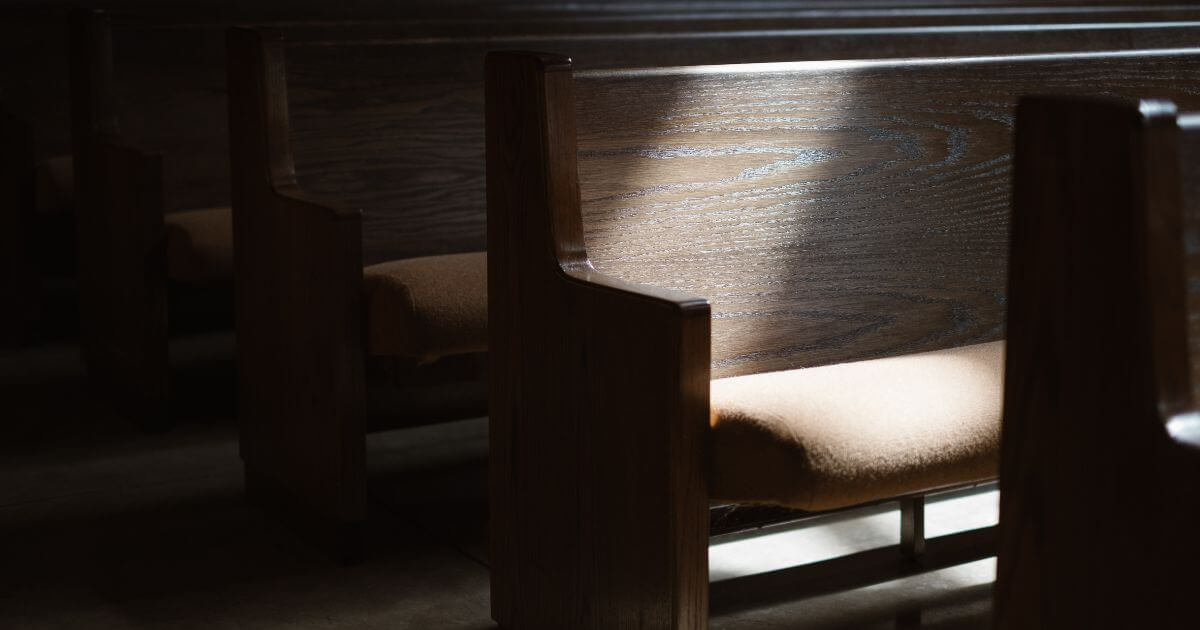
What is the meaning and origin of the word "church"?
What is the meaning and origin of the word “church”?
Church means God’s called-out people, a community gathered for His presence and His mission. Though English later tied the word to “the Lord’s house,” Scripture shows the church has always been a people, not a place.
what does the bible say?
The word “church” goes far deeper than a building—it originates in God’s long-standing pattern of calling a people out to gather around His presence. The ekklesia is the New Testament gathering of believers. Scripture consistently shows that the church is a living community, not a location, a people shaped by God’s call, His covenant, and His mission. While English later developed the word “church” from the idea of “the Lord’s house,” the Bible roots the church firmly in identity, not architecture. This means that every gathering of believers participates in a story far older than the New Testament—a people called, formed, and sent by God Himself—and it brings all of God’s people together, regardless of where they live or meet to worship. The church is not where we go, but who we are, united as God’s family and filled with His purpose.
from the old testament
- The Old Testament does not have information on the meaning and origin of the word “church.” However, the Old Testament repeatedly describes Israel as “the assembly” (qāhāl) and “the congregation” (‘ēdāh)—a gathered people called out by God. These terms appear throughout the Law and the Prophets to describe God’s people gathered for worship, covenant renewal, war, or instruction (e.g., Deuteronomy 9:10; 23:1–3; Numbers 20:1–4). When the Hebrew Bible was translated into Greek (the Septuagint), qāhāl was often translated with the same Greek word later used for “church”—ekklesia. Therefore, the concept of the “church” as God’s assembled people didn’t start in the New Testament, but it grew organically out of Israel’s identity as God’s gathered community.
- God personally “calls out” a people to Himself in the Old Testament, forming a covenant community—an early pattern of what ekklesia means. God calls Abraham out of his l and (Genesis 12:1–3), calls Israel out of Egypt (Exodus 12–14), and calls the nation to assemble at Sinai to hear His voice (Exodus 19:5–6, 17). This “calling out” and gathering establishes the theological roots of the New Testament “church”: not a building, but God’s called-out people gathered for His presence, His word, and His mission.
from the new testament
- Every time “church” appears in the New Testament, it always refers to people, not a building, and it is translated from the Greek word ekklesia, meaning “an assembly” or “a called-out gathering of people” (e.g., Matthew 16:18; Acts 5:11; Ephesians 1:22–23).
- Paul explained this understanding of “church” in 1 Corinthians 1:2 when he wrote, “To the church of God that is in Corinth, to those sanctified in Christ Jesus, called to be saints together with all those who in every place call upon the name of our Lord Jesus Christ, both their Lord and ours.” The word “church” in this verse in the original Greek is ekklesia, and Paul emphasized that his letter was meant for all people who submit to Christ Jesus as their Lord.
implications for today
The English word “church” comes from the Old English circe or cyrce, which is related to the Dutch kerk and German kirche. All of these words derive from the Greek phrase kuriakon doma, which means “Lord’s house,” from kurios, meaning “Lord” or “master.” Because “church” comes from the Greek for “Lord’s house,” the English word often refers not only to the group of people, but more often to the building where Christians meet. But the Bible does not use “church” to refer to the building. So, if the biblical concept of church is the assembly of people who have been called out to follow Jesus, how did the concept of the “Lord’s house” as “church” begin? One clue may be found in Paul’s letter to Timothy. First Timothy 3:15 says, “if I delay, you may know how one ought to behave in the household of God, which is the church of the living God, a pillar and buttress of the truth.” Here, “church” is connected with the concept of “the household of God,” so perhaps, Christians began to refer to their times together as coming to the Lord’s house because together they were “the household of God.” Of course, even today, the English word “church” can also still be used to refer to the people of God who believe in Jesus. However, this English word is a good example of how our understanding of biblical concepts can be enhanced by studying the Bible in its original languages and context.
Recap
understand
- Biblically, “church” (ekklesia) always refers to God’s people—His called-out assembly—not a building.
- The concept of the church grows out of the Old Testament gatherings of God’s people (qāhāl/‘ēdāh), which the Septuagint often translated as ekklesia.
- The English word “church” later developed from terms meaning “the Lord’s house,” but the Bible roots the church in identity, not architecture.
reflect
- How does understanding yourself as part of God’s “called-out” people change the way you view your role in the church?
- In what ways might you be tempted to think of church as a place you go, rather than a people you belong to?
- How can you more intentionally live as someone gathered to worship as a community in God’s presence, to study His Word, and to remember His mission?
engage
- How does the Old Testament vision of God’s assembled people (qāhāl/‘ēdāh) shape our understanding of the New Testament ekklesia?
- What impact does the shift from “church as building” to “church as people” have on our view of church?
- How can we explain well the meaning and purpose of the church?