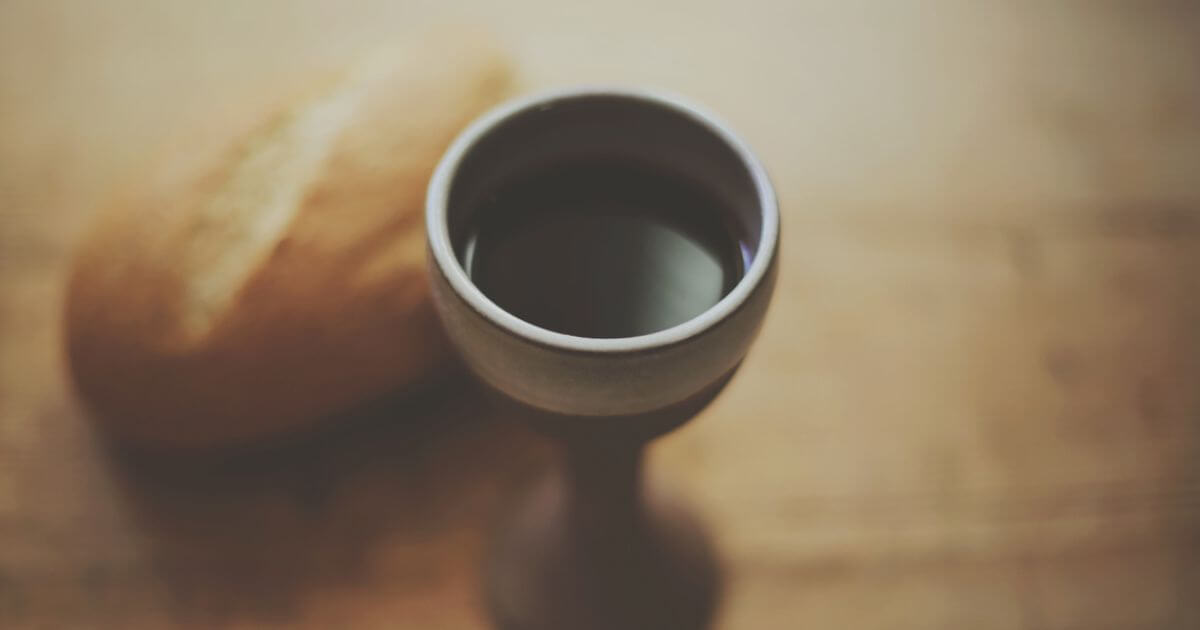
Why is there so much disagreement about Holy Communion?
Why is there so much disagreement about Holy Communion?
Disagreements about Holy Communion arise because some take Jesus’ words literally while others see them symbolically. Communion is a memorial of Christ’s sacrifice, not a means to earn grace, and salvation comes through faith in Him alone.
what does the bible say?
Disagreements about Holy Communion largely stem from differing interpretations of Jesus’ words at the Last Supper, with some taking them literally and others seeing them symbolically. For example, the doctrine of transubstantiation, held by the Roman Catholic Church, teaches that the bread and wine literally become Christ’s body and blood, while others, including Compelling Truth, view the elements as symbolic reminders of Jesus’ sacrifice. Another point of contention is whether taking communion affects one’s ability to receive God’s grace. Scripture clarifies that salvation and grace come through faith in Jesus Christ, not through participation in the ritual (Ephesians 2:8–9). Communion is meant as a memorial, reminding believers of Jesus’ death and resurrection and His covenant for the forgiveness of sins (Luke 22:19–20; Matthew 26:26–28). While practices like frequency, who serves, or whether to use wine or grape juice vary among denominations, the key is to observe Holy Communion in a way that honors God and Jesus’ sacrifice. Above all, communion should point believers back to Christ and remember our need for a Savior.
from the old testament
- Disagreement about Holy Communion is not discussed in the Old Testament.
from the new testament
- Some sects of the Church teach believers must take holy communion to receive grace. Supporters reference John 6:54 when Jesus describes Himself as the bread of life: “Whoever feeds on my flesh and drinks my blood has eternal life, and I will raise him up on the last day” (John 6:54). However, we must consider this description within the context of John 6 and the Bible as a whole. Earlier, in John 6:40, Jesus communicates that eternal life comes from putting our faith in Jesus and not through something we do.
- While certain churches believe in transubstantiation, Romans 6:9–10 contradicts this because it says that Christ only died once and was resurrected. If the bread becomes His body every time communion is taken this would suggest that Jesus is being sacrificed over and over again.
- A good passage to look to for an in-depth account of the Last Supper is Luke 22:7–23.
- In 1 Corinthians 11:17–26 Paul explains the basic concept of communion to the church of Corinth who had previously misused and abused the observance.
- Any teaching that claims that a practice qualifies us for God’s grace is false and must be swiftly corrected. Biblically, it is clear salvation is not by our works, but by God’s free gift of salvation to those who believe in Jesus Christ. Ephesians 2:8–9 says: “For by grace you have been saved through faith. And this is not your own doing; it is the gift of God, not a result of works, so that no one may boast.”
implications for today
Holy communion, otherwise referred to as simply communion, is a ritual performed in Christian churches that originated during Jesus’ Passover meal, or Last Supper, with His disciples prior to His crucifixion. It is also known as the Lord’s Supper, the Lord’s Table, and the Eucharist. There are four accounts of the Last Supper in the Bible, found in Matthew 26:17–29, Mark 14:12–25, Luke 22:7–23, and 1 Corinthians 11:23–26. We know from these passages that during the Last Supper Jesus blessed the bread and then broke it and gave it to the disciples. He told them, “Take, eat; this is my body” (Matthew 26:26). Then He took a cup and passed it around telling them to each drink from it. Jesus told the disciples that they should do this in remembrance of Him. He said, “Drink of it all of you, for this is my blood of the covenant, which is poured out for many for the forgiveness of sins” (Matthew 26:27–28). Finally, He said that He would not drink of the fruit of the vine again until He drinks it with His followers in His Father’s kingdom. While most Christians agree with the general, biblical account of the Last Supper, there are different views on how the ritual should be practiced today. Different sects of the church disagree on how often believers should take communion, who should serve communion, what should be said during communion, and whether the cup should be filled with wine or grape juice. Jesus does not provide any specific instructions regarding these questions. This gives individual denominations and churches the freedom to organize the ritual in a way that best fits their community. However, there are churches who have beliefs surrounding communion that are dangerously contradictory to the Bible, such as seeing it as a mode to receive God’s grace. Since such views are opposed to the gospel, we should not accept nor participate in them at all. Regardless of how we interpret the exact details of holy communion, the message from Jesus is clear. He died on the cross to pay for our sins and then was resurrected, overcoming death. Thus, by confessing our sins and putting our faith in Jesus we can be forgiven and overcome death as well, receiving the gift of eternal life in Heaven. We take communion to be reminded of the sacrifice Jesus made for us and our need for Him as our Savior.
Recap
understand
- The main disagreement with Holy Communion comes from the differences in taking Jesus’ words literally or symbolically.
- Communion is a memorial of Christ’s sacrifice, not a means to earn grace.
- Practices of Holy Communion may vary, but the focus must always be on Christ and His sacrifice.
reflect
- How do you personally approach Holy Communion?
- How does taking communion remind you of your need for Christ and His sacrifice?
- How might your understanding of salvation by faith alone affect the way you participate in Holy Communion?
engage
- What essentials regarding communion must we hold onto while maintaining diversity in the way we take communion?
- What are practical ways to ensure that communion points everyone back to Christ?
- How should we address teachings or practices around communion that contradict the Bible?